
Bloodline
Mon Rovîa's debut album arrives
“What I didn’t realize then was how long it would take to grow into the story behind that name, the grief, the quiet, and the slow disassembly of a self that resisted its own becoming.”
— Mon Rovîa
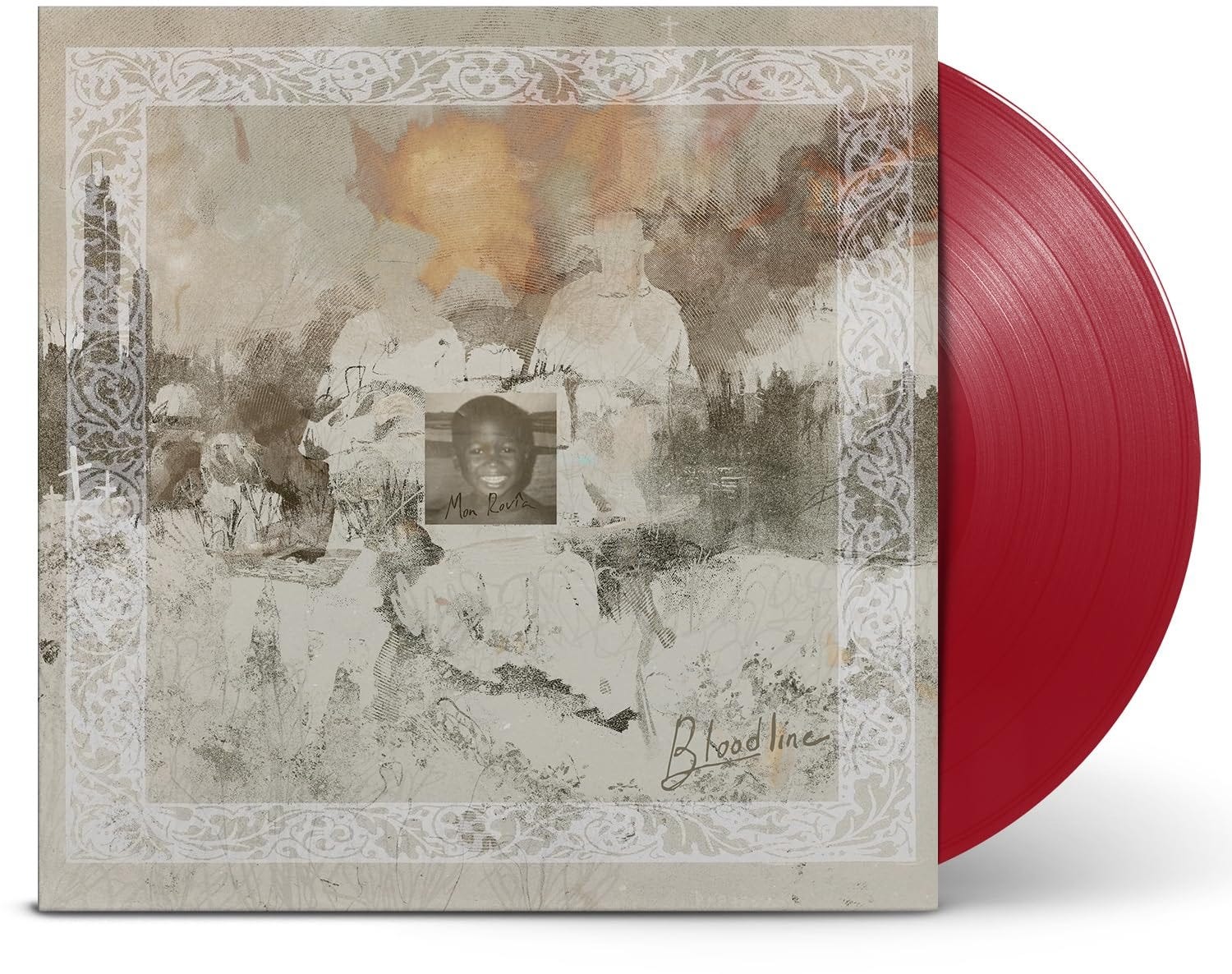
This week so much of the news has been enormously stressful and depressing. So here’s some balm for those aches.
Mon Rovîa’s debut album Bloodline dropped yesterday, and the early reviews are in. The verdict is pretty unanimous that it’s something special.
For those who’ve been following along with my shameless parent plugs over the past year, you know my son Sam plays bass and keyboards with the band. You know about their sold-out shows, the Newport Folk Festival, the Grand Ole Opry debut, and the European tours.
Bloodline is sixteen tracks chronicling Mon’s journey from war-torn Liberia through his coming-of-age across continents and communities. It’s the record he’s been building toward through four EPs structured around the hero’s journey: wandering, trials, the dying of self, and atonement.
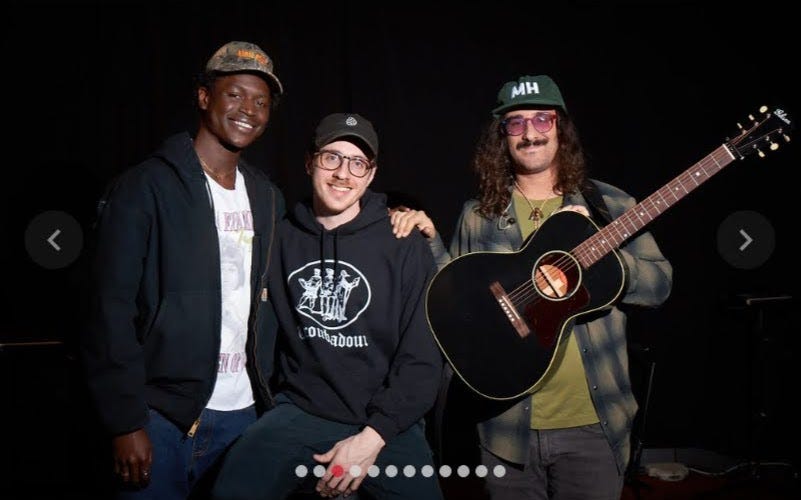
Folk Alley describes “swirling melodies, hypnotic rhythms, and joyous harmonies” creating a “mesmerizing soundscape.” At The Barrier hears echoes of early Bon Iver (”isolated in his country cabin, long before discovering all the electrickery”) and Michael Kiwanuka‘s quieter moments. The genre is “Afro-Appalachian” and they call it “joyous acoustic music sans frontières.”
Americana Highways praises the “thoroughly modern style of folk, with synths meshing comfortably with acoustic guitar, banjo and ukulele” and notes Mon’s “endlessly listenable vocals.” They single out “Somewhere Down in Georgia” as the song they can’t wait to hear live: a “deceptively uptempo indictment” of dangerous leadership that’s “just as dangerously unhinged in 2026 America as it was in the Liberia of Lowe’s youth.”
New Releases Now captures what makes this more than a typical debut: “It’s like the culmination of years spent assembling a fractured past shaped by war, adoption, migration, and reinvention... This is folk music rooted not just in acoustic tradition, but in testimony.”
That word testimony keeps resurfacing in my thinking about what Mon Rovia does. There’s a difference between performance and witness. When I watched the crowd at Thalia Hall back in November, I saw people receiving something, not just consuming it. Mon talks openly between songs about mental health, loss, and grief. He encourages everyone to grow into their fullness. His stated mission is “healing with others,” and you see that dynamic more clearly in concert than just by listening online.
Atwood Magazine featured “Heavy Foot” as a standout, calling it “a rallying cry, a lament, a hymn, and a hand outstretched all at once—a protest song made not to divide, but to unite.” That seems right. In a time when so much conspires to pull us apart, this music reconnects.
Remembering Wendell Berry’s observation that there is no distinction between sacred and secular, only sacred and desecrated, I’d call this sacred music and deeply human.
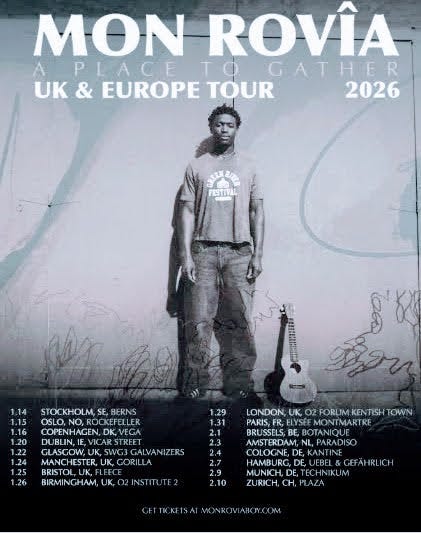
The journey continues. In February they begin their second European tour: Stockholm, Cologne, Berlin, Amsterdam, Brussels, Paris, London, Dublin.
I remain the proud papa and not objective at all. But the reviews speak for themselves. I know how fickle the market can be so I pray they keep receiving this as a gift that wants to keep giving; a goodness that wants to keep unfolding. Buy their music. Put them in your prayers for travelling mercies and general “prosperity” - that good old biblical word for human fullness and flourishing.
Listen:
Tour dates and more: monroviaboy.com
Ric, clearly it has been several decades since we had a conversation...i had no idea about your talented son. That's wonderful! And you should be aproud papa. Blessings, Leslie K